



“My Lord and my God, my God and my all, give me Thyself and nothing else.”
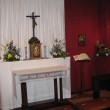
2 God Alone
Thomas says to Him, “My Lord and my God.”
1. I adore Thee, O my God, with Thomas; and if I have, like him, sinned through unbelief, I adore Thee the more. I adore Thee as the One Adorable, I adore Thee as more glorious in Thy humiliation, when men despised Thee, than when Angels worshipped Thee. Deus meus et omnia-“My God and my all.” To have Thee is to have everything I can have. O my Eternal Father, give me Thyself. I dared not have made so bold a request, it would have been presumption, unless Thou hadst encouraged me. Thou hast put it into my mouth, Thou hast clothed Thyself in my nature, Thou hast become my Brother,
 Quo ego vado, non potes Me modo sequi, sequeris autem postea.
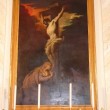 Our Lord and Saviour Jesus Christ, when He came on earth in our flesh, made a perfect atonement, “sacrifice, oblation, and satisfaction for the sins of the whole world.” He was born of a woman, He wrought miracles, He fasted and was tempted in the desert, He suffered and was crucified,
 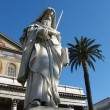 St Paul is engaged, in the chapter from which these words are taken, in humbling the self-conceit of the Corinthians. They had had gifts given them; they did not forget they had them; they used, they abused them; they forgot, not that they were theirs, but that they were given them. They seem to have thought that those gifts
 And this anticipation is confirmed by the history of our Lord’s temptation in the wilderness. It began, you will observe, with an attempt on the part of the evil one to make Him break His fast improperly. It began, but it did not end there.
 “Father, I have sinned against heaven and before thee, and am no more worthy to be called thy son; make me as one of thy hired servants.” (Luke 15:18, 19)
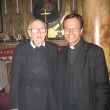 Fr Gregory died peacefully at St Joseph’s Home, Harborne, on Wednesday January 18th. He was 89 years old, and had been a member of the Oratory Community for nearly fifty one years and a priest for nearly forty nine years.
 … when we are asked, ‘Where is the Church ?’ lean but answer, ‘Where it was’ – the Church only is while it is one, for it is individually as He who animates and informs it.
 O Lord Jesus Christ,